The World Economy in Flux: Why Change Feels Unstoppable
The global economy is no longer a steady ship sailing predictable waters. Instead, it resembles a vessel tossed by relentless storms—shifts so deep and widespread that even seasoned economists struggle to chart its course. These aren’t minor ripples on the surface; they are tectonic movements reshaping supply chains, labor markets, trade alliances, and financial systems. From the rise of artificial intelligence to the reshoring of manufacturing, from geopolitical rivalries to climate-induced disruptions, the ground beneath the world economy is shifting in ways that challenge old assumptions and redefine future possibilities.
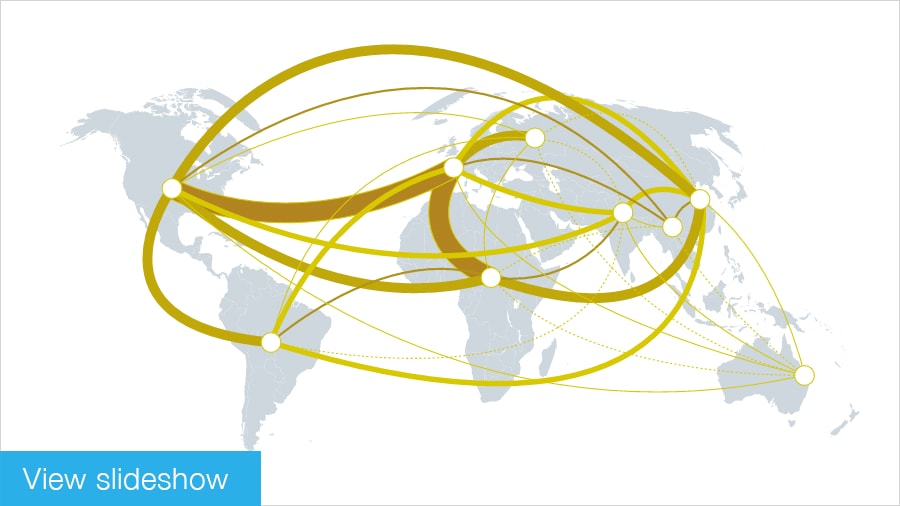
What makes this era so different from past economic transformations is the speed and interconnectedness of change. Decisions made in one corner of the globe—whether a tariff imposed by the United States, a cyberattack on a semiconductor plant in Taiwan, or a drought in Brazil—can ripple across continents within days. The pandemic exposed just how fragile global integration has become, while simultaneously accelerating trends that were already underway: remote work, digital transformation, and the reconfiguration of production networks. Now, as inflation persists, debt levels soar, and populations age, the world stands at a crossroads where the old rules no longer apply.
The Silent Revolution: Technology as the New Architect of Growth
The AI and Automation Wave
At the heart of the economic transformation lies technology—specifically, artificial intelligence and automation. It’s not just about replacing routine tasks anymore; AI is now capable of creative problem-solving, language generation, and even strategic decision-making. Companies across industries are integrating AI to cut costs, enhance productivity, and personalize services. But this shift comes with a cost: job displacement in traditional sectors like manufacturing and customer service. While new roles are emerging in tech, data analysis, and machine maintenance, the transition isn’t smooth. The skills gap is widening, and governments are scrambling to retrain workforces before entire communities are left behind.
Beyond the workplace, AI is reshaping global competitiveness. Nations that lead in AI research and development—such as the United States and China—are pulling ahead in innovation, while others risk falling into a cycle of dependency. The race for AI supremacy is not just economic; it’s geopolitical. Access to advanced semiconductors, data infrastructure, and AI talent has become a new form of national security. The recent U.S. restrictions on semiconductor exports to China underscore how technology is no longer a neutral tool but a weapon in a broader struggle for economic dominance.
Digital Economies and the Rise of the Metaverse
Alongside AI, the digital economy is evolving into something far more immersive and transformative. The metaverse—a virtual space where users interact via avatars in real-time—is no longer science fiction. From virtual real estate to NFT-based digital ownership, the metaverse is creating entirely new markets. Companies like Meta, Microsoft, and even luxury brands are investing billions to build these digital ecosystems. While still in its infancy, the metaverse has the potential to redefine commerce, entertainment, and social interaction.
Yet, this digital frontier comes with challenges. Privacy concerns, cybersecurity threats, and the risk of monopolistic control by tech giants are pressing issues. Moreover, the metaverse’s economic impact will depend on internet accessibility and digital literacy—factors that remain unevenly distributed across the globe. For developing nations, the metaverse could either be an opportunity to leapfrog traditional infrastructure or another source of inequality if only wealthy nations reap the benefits.
The Great Realignment: Reshoring, Nearshoring, and the Fracturing of Globalization
Why Globalization Is Changing Direction
For decades, globalization was the dominant economic paradigm—cheap labor in Asia, supply chains spanning continents, and open markets driving growth. But the pandemic exposed the vulnerabilities of this model. Lockdowns in China, shortages of semiconductors, and the Suez Canal blockage highlighted the risks of over-reliance on distant suppliers. Now, businesses and governments are rethinking globalization. The term “de-risking” has entered the lexicon, replacing the once-popular “decoupling” as a more nuanced approach to reducing dependency on rival nations, particularly China.
Reshoring—the act of bringing production back to domestic soil—has gained momentum. The United States, for example, has passed the CHIPS Act and the Inflation Reduction Act, offering subsidies to encourage semiconductor and clean energy manufacturing at home. Similarly, Europe is pushing for strategic autonomy, reducing its reliance on Russian energy and Chinese electronics. Even Japan and South Korea are investing in domestic production of critical goods like batteries and pharmaceuticals.
The Geopolitical Chessboard: Friendshoring and Sanctions
As reshoring and nearshoring (moving production to nearby countries) take hold, a new economic doctrine is emerging: friendshoring. This strategy involves shifting supply chains to countries that share similar political values, reducing exposure to geopolitical adversaries. The U.S. and its allies are increasingly favoring trade with nations like India, Vietnam, and Mexico over traditional partners like China. This shift is not just about security; it’s also about aligning economic interests with strategic goals.
But this realignment comes with consequences. Countries that were once manufacturing hubs—such as Bangladesh, Vietnam, and Mexico—are now facing both opportunities and challenges. While they benefit from increased investment, they also risk becoming overly dependent on a single economic bloc. Meanwhile, nations caught in the middle, like Turkey and South Africa, are struggling to navigate the new trade landscape without alienating major partners.
The use of economic sanctions as a geopolitical tool has also intensified. Western sanctions on Russia following its invasion of Ukraine disrupted global energy and commodity markets, sending shockwaves through economies from Europe to Africa. Sanctions on Iran, North Korea, and Venezuela have similarly created ripple effects, fueling black markets and alternative financial systems. The rise of cryptocurrencies and digital payment systems like CBDCs (central bank digital currencies) is partly a response to these sanctions, offering new ways to bypass traditional financial controls.
The Climate Equation: How Environmental Shocks Are Reshaping Markets
The Cost of Climate Change
Climate change is no longer a distant threat; it’s a present-day disruptor. Extreme weather events—hurricanes, droughts, wildfires—are becoming more frequent and severe, causing billions in economic damage. The 2022 floods in Pakistan, which submerged a third of the country, displaced millions and destroyed crops, leading to food shortages and inflation. Similarly, the 2021 European heatwave disrupted energy supplies and agricultural production. These events are not anomalies; they are the new normal, and their economic impact is forcing businesses and governments to adapt.
The transition to a green economy is accelerating, but it’s not happening evenly. The European Union’s Green Deal, the U.S. Inflation Reduction Act, and China’s dominance in renewable energy technologies are driving investment in solar, wind, and electric vehicles. However, the shift is uneven. Developing nations, which often bear the brunt of climate impacts, struggle to finance green transitions without adequate international support. Meanwhile, fossil fuel-dependent economies face a dilemma: invest in renewable energy or risk economic decline as global demand shifts.
The Green Premium and the Race for Critical Minerals
One of the biggest challenges in the green transition is the “green premium”—the additional cost of choosing sustainable alternatives over cheaper, polluting options. While solar and wind energy are now cheaper than coal in many places, the upfront costs of infrastructure and storage remain high. Governments are stepping in with subsidies and incentives, but the transition requires massive investment. The International Energy Agency estimates that achieving net-zero emissions by 2050 will require annual investments of $4 trillion in clean energy.
Another critical bottleneck is the supply of critical minerals like lithium, cobalt, and rare earth elements—essential for batteries, wind turbines, and electronics. China currently dominates 80% of the global supply chain for these minerals, giving it significant leverage. The U.S. and EU are now scrambling to secure alternative sources, from mines in Australia and Canada to processing plants in Europe. This race for minerals is not just economic; it’s a strategic imperative to avoid repeating past dependencies.
The Demographic Dilemma: Aging Populations and Labor Shortages
The Graying of the Global Workforce
Across much of the developed world, populations are aging at an unprecedented rate. Japan, South Korea, and much of Europe are facing shrinking workforces, rising pension costs, and increased pressure on healthcare systems. In Japan, over 29% of the population is 65 or older—the highest proportion in the world. This demographic shift has profound economic implications: slower growth, higher taxes, and a shrinking consumer base. Meanwhile, countries like China, due to its one-child policy, are now experiencing a similar trend, with its working-age population peaking in 2015 and declining ever since.
The aging crisis is not confined to wealthy nations. Even in Africa, where populations are still growing rapidly, the demographic dividend—where a large working-age population fuels economic growth—is starting to wane in some countries as fertility rates decline. The global workforce is not only shrinking in some regions but also becoming more polarized between aging populations and youth bulges in other parts of the world, such as parts of South Asia and Sub-Saharan Africa.
The Role of Immigration and Automation
To counter labor shortages, many countries are turning to immigration. Canada, Germany, and Australia have implemented policies to attract skilled workers, while the U.S. continues to debate immigration reform. However, political resistance to immigration remains strong in many nations, fueled by concerns over cultural integration and job competition. The debate over whether immigration is a solution or a problem is likely to intensify as demographic pressures grow.
On the other hand, automation offers a technological solution to labor shortages. Robots and AI-driven systems are increasingly filling gaps in manufacturing, logistics, and even healthcare. Japan, for instance, is a global leader in robotics, deploying machines in nursing homes and factories to compensate for its aging workforce. While automation can boost productivity, it also raises ethical and social questions about the future of work and the role of humans in an increasingly machine-driven economy.
The Debt Deluge: How Soaring Borrowing Is Reshaping Economic Stability
The Global Debt Crisis
Global debt has reached staggering levels. As of 2023, total global debt—including government, corporate, and household borrowing—exceeds $300 trillion, more than triple global GDP. The pandemic triggered massive borrowing as governments and businesses sought to survive lockdowns and economic contractions. While debt was necessary to prevent a deeper crisis, the long-term consequences are becoming apparent. High debt levels limit governments’ ability to respond to future shocks and can lead to financial instability when interest rates rise.
The burden of debt is unevenly distributed. Advanced economies like the U.S. and Japan can service their debt more easily due to strong currencies and deep financial markets. However, many developing countries face a debt crisis. Zambia, Sri Lanka, and Ghana have defaulted on their debts in recent years, while others teeter on the brink. The International Monetary Fund (IMF) has warned that a third of low-income countries are at high risk of debt distress. The rise in global interest rates, driven by central banks fighting inflation, has made servicing debt more expensive, pushing some nations toward default.
The Dollar’s Dominance and the Search for Alternatives
The U.S. dollar remains the world’s dominant reserve currency, accounting for nearly 60% of global foreign exchange reserves. This dominance gives the U.S. significant economic leverage, allowing it to fund deficits and impose sanctions with relative ease. However, the dollar’s supremacy is not unchallenged. Countries like China, Russia, and Iran are exploring alternatives, such as digital currencies, gold-backed assets, and regional payment systems like BRICS’ proposed common currency.
The rise of cryptocurrencies, particularly stablecoins pegged to the dollar, adds another layer to the currency landscape. While still niche, these digital assets offer a way to bypass traditional financial systems, which could weaken the dollar’s influence over time. The shift away from the dollar is gradual, but if it accelerates, it could reshape global trade, reduce the U.S.’s financial dominance, and create a multipolar monetary system.
The Future We Face: Scenarios for the Next Decade
Scenario 1: Fragmented Prosperity
In this scenario, the global economy becomes more regionalized, with countries prioritizing self-sufficiency and alliances with like-minded partners. Trade blocs like the EU, ASEAN, and the proposed African Free Trade Zone deepen integration within their regions, while cross-regional trade declines. Technological progress continues, but its benefits are unevenly distributed, with wealthier nations pulling further ahead. Geopolitical tensions persist, but full-scale conflict is avoided through economic interdependence and deterrence. However, this fragmentation leads to slower global growth, higher costs for consumers, and a widening gap between developed and developing nations.
In this world, supply chains are shorter but less efficient, innovation is concentrated in a few hubs, and inequality within and between nations increases. Governments focus on resilience over efficiency, investing in domestic industries and stockpiling critical goods. The result is a more stable but less dynamic global economy, where progress is measured in decades rather than years.
Scenario 2: The Green Industrial Revolution
This scenario envisions a world where the transition to a sustainable economy accelerates, driven by technological breakthroughs, government incentives, and shifting consumer preferences. Renewable energy becomes the dominant source of power, electric vehicles replace combustion engines, and green hydrogen transforms industries like steel and shipping. Circular economies—where waste is minimized and resources are reused—become the norm.
The green industrial revolution spurs massive investment and job creation, particularly in renewable energy, battery storage, and sustainable agriculture. Countries that lead this transition, such as China in solar panels and the U.S. in electric vehicles, gain economic and geopolitical influence. Meanwhile, fossil fuel-dependent economies either adapt or face decline. International cooperation on climate action strengthens, with developed nations providing financial support to developing countries for green transitions. The result is a more stable climate, reduced pollution, and a new era of economic growth built on sustainability.
However, achieving this scenario requires unprecedented global cooperation and investment. Without it, the transition could stall, leaving the world stuck in a hybrid economy where fossil fuels and renewables coexist uneasily, and climate goals remain out of reach.
Scenario 3: The Great Unraveling
The most pessimistic scenario involves a confluence of crises: escalating geopolitical conflicts, financial instability, and climate disasters. A major cyberattack cripples global supply chains, or a new pandemic triggers another round of lockdowns. Meanwhile, rising debt levels lead to sovereign defaults, triggering a financial crisis reminiscent of 2008 but on a global scale. Geopolitical tensions boil over into trade wars, technology bans, and even military conflicts, further disrupting economies.
In this scenario, globalization reverses sharply, with countries retreating behind protectionist walls. Economic growth stagnates, unemployment rises, and social unrest spreads. The most vulnerable populations—those in low-income countries and marginalized communities—suffer the most. The global order fractures, and the institutions that once maintained stability—the IMF, World Bank, and WTO—lose their relevance. The result is a world of declining living standards, increased inequality, and heightened conflict, with no clear path forward.
Navigating the Storm: Strategies for Businesses, Governments, and Individuals
For Businesses: Adapt or Be Left Behind
Businesses today operate in an environment of constant disruption. To thrive, they must embrace agility and innovation. This means investing in digital transformation, upskilling workforces, and diversifying supply chains. Companies should monitor geopolitical risks closely, as trade barriers and sanctions can disrupt operations overnight. Building resilience into supply chains—through nearshoring, stockpiling critical components, and adopting flexible manufacturing—is no longer optional but essential.
On the technology front, businesses must stay ahead of AI and automation trends. Those that fail to integrate these tools risk being outpaced by competitors. However, ethical considerations cannot be ignored. Transparency in AI decision-making, data privacy, and fair labor practices are becoming key differentiators for consumers and investors alike. Sustainability is another critical area. Companies that align with green initiatives will not only comply with regulations but also attract a growing base of eco-conscious customers.
For Governments: Balancing Security and Growth
Governments face a daunting task: fostering economic growth while addressing the structural challenges of the 21st century. This requires a mix of industrial policy, social safety nets, and international cooperation. Industrial policies should focus on sectors with high growth potential, such as clean energy, semiconductors, and biotechnology. Subsidies and tax incentives can encourage private investment, but they must be carefully designed to avoid market distortions.
Social policies are equally important. As automation displaces jobs, governments must invest in education and retraining programs. Universal basic income and wage subsidies could provide a safety net for workers in declining industries. Immigration policies should be reformed to attract skilled labor while addressing public concerns about integration and cultural change.
On the international stage, governments must rebuild trust and cooperation. The era of unchecked globalization is over, but a complete retreat into protectionism would be self-defeating. Instead, nations should seek to strengthen regional trade blocs while maintaining open channels for essential goods and technologies. Climate action must be integrated into all economic policies, with developed nations leading by example and providing support to developing countries.
For Individuals: Preparing for an Uncertain Future
For individuals, the economic landscape of the future will require adaptability and foresight. The days of a single career path are fading; lifelong learning is no longer a buzzword but a necessity. This means embracing digital literacy, staying updated on industry trends, and being open to career pivots. Side hustles and multiple income streams can provide financial resilience in an unpredictable job market.
Financial planning is also critical. High debt levels make individuals vulnerable to economic shocks, whether from job loss, rising interest rates, or inflation. Building an emergency fund, diversifying investments, and avoiding over-leveraging are key strategies. For those in vulnerable sectors, reskilling may be the best investment they can make.
On a broader level, individuals can advocate for policies that promote economic fairness and sustainability. Supporting local businesses, choosing sustainable products, and engaging in civic discourse can influence the direction of economic policies. In a world where top-down solutions are scarce, grassroots movements and community initiatives can fill the gap, creating resilient local economies that are less dependent on global volatility.
Conclusion: The Economy of Tomorrow Is Being Built Today
The global economy is not just changing—it is being reshaped by forces that are as profound as they are unpredictable. Technology, geopolitics, climate change, demographics, and debt are converging to create a new economic reality, one where old certainties no longer apply. The path forward is not predetermined. It will be shaped by the choices of businesses, governments, and individuals over the coming decade.
What is clear is that resilience will be the defining trait of success in the 21st century. Nations, companies, and people that can adapt, innovate, and collaborate will thrive. Those that cling to the past, whether out of fear or inertia, will struggle. The storm is already here. The question is not whether we can weather it, but how we will emerge from it—and what kind of world we will build on the other side.