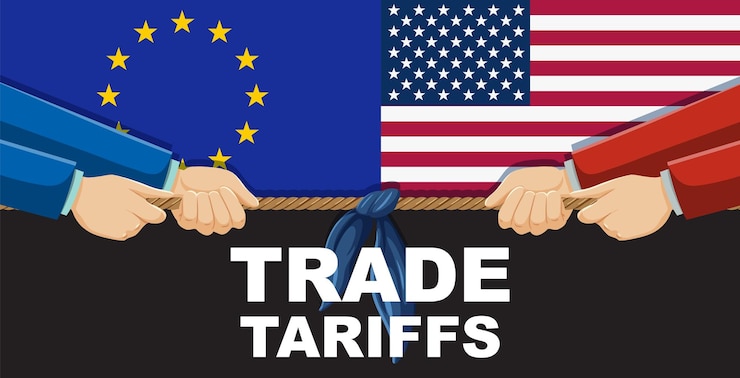
The New Era of Global Trade: A Double-Edged Sword
Global trade has always been the backbone of economic growth, connecting nations, industries, and consumers across continents. Yet, in recent years, it has evolved into something far more complex—a dynamic force reshaping not just economies, but entire geopolitical landscapes. The pandemic, geopolitical tensions, supply chain disruptions, and technological revolutions have all converged to create a world where trade is no longer a predictable engine of prosperity but a source of both opportunity and instability. Navigating this chaos requires more than just understanding trade flows; it demands a deep appreciation of the forces driving change and the strategies nations and businesses must adopt to thrive in this new reality.
At its core, global trade today is defined by three overarching trends: fragmentation, digitalization, and geopolitical rivalry. These trends are not just reshaping the “what” and “how” of trade—they are redefining the very foundations of economic power. Countries that once relied on seamless global supply chains now find themselves grappling with protectionist policies, while businesses scramble to adapt to a world where technology and trade are inseparable. The result is a global economy that is more interconnected than ever, yet paradoxically, more vulnerable to shocks.
The Fragmentation of Global Supply Chains: Reshoring, Nearshoring, and Friendshoring
For decades, globalization led to the creation of sprawling, efficiency-driven supply chains that stretched across oceans and continents. Companies chased the lowest costs, outsourcing production to countries with abundant labor and favorable trade agreements. But the cracks in this system became impossible to ignore during the COVID-19 pandemic, when factories shuttered, ports clogged, and entire industries ground to a halt. The lesson was clear: over-reliance on distant suppliers, especially in politically unstable or logistically vulnerable regions, posed unacceptable risks.
In response, a seismic shift is underway. Reshoring—bringing production back home—has gained traction, particularly in industries critical to national security, such as semiconductors and pharmaceuticals. The U.S. CHIPS Act, for example, allocates billions to revive domestic chip manufacturing, while the European Union’s Green Deal Industrial Plan aims to strengthen local clean energy supply chains. Nearshoring, the practice of relocating production to neighboring or nearby countries, offers a middle ground, reducing lead times and transportation costs while maintaining some geographic proximity. Mexico, Vietnam, and Poland have emerged as key beneficiaries of this trend, attracting investment as alternatives to China.
The concept of friendshoring takes this further by prioritizing trade partnerships with ideologically aligned or politically trusted nations. The U.S. and its allies are increasingly funneling trade through a network of like-minded countries, bypassing geopolitical rivals. This approach is evident in the push to diversify away from China in favor of countries such as India, Japan, and the EU. While friendshoring can mitigate risks, it also risks creating a bifurcated global economy, where trade becomes another battleground in the broader struggle for influence.
The Risks of Fragmentation
While fragmentation may enhance resilience, it comes at a cost. Supply chains become more expensive and less efficient, as companies sacrifice economies of scale for the sake of security. Smaller nations may struggle to attract investment if they are excluded from these new trade blocs. Moreover, the geopolitical tensions driving fragmentation—especially the rivalry between the U.S. and China—could lead to a prolonged period of economic uncertainty, stifling innovation and growth. The question is no longer whether fragmentation will continue, but how nations and businesses will adapt to its consequences.
Technology as the Great Equalizer (and Disruptor)
No discussion of modern global trade would be complete without addressing the role of technology. From artificial intelligence to blockchain, digital tools are transforming how goods are produced, transported, and traded. E-commerce platforms like Amazon and Alibaba have democratized access to global markets, allowing small businesses to reach customers continents away. Meanwhile, automation and robotics are reshaping manufacturing, reducing the appeal of low-cost labor hubs and bringing production closer to end markets.
The rise of digital trade—facilitated by platforms like Shopify, Etsy, and digital marketplaces—has blurred the lines between physical and virtual commerce. In 2023, cross-border e-commerce alone was valued at over $3 trillion, a figure projected to double by 2027. This shift has created new opportunities for entrepreneurs in developing nations, who can now compete on a global stage without the need for massive infrastructure. However, it has also intensified competition, as businesses in high-cost countries scramble to keep up with low-cost digital competitors.
The Role of Blockchain and AI in Trade
Blockchain technology is another game-changer, offering transparency and security in a system often plagued by inefficiencies and fraud. By creating immutable records of transactions, blockchain can streamline customs clearance, reduce paperwork, and combat counterfeit goods. Maersk and IBM’s TradeLens platform, for example, uses blockchain to digitize supply chain documentation, cutting processing times by up to 40%. Similarly, AI is optimizing logistics, predicting demand, and even automating negotiations in trade agreements.
Yet, technology is not a panacea. The digital divide means that not all countries or businesses can harness these tools equally. Developing nations risk being left behind, exacerbating global inequality. Additionally, the reliance on digital infrastructure introduces new vulnerabilities, from cyberattacks to data privacy breaches. As trade becomes increasingly digitized, the need for robust cybersecurity frameworks and international cooperation on digital trade rules becomes ever more urgent.
The Geopolitical Chessboard: Trade as a Tool of Power
Trade has long been a tool of soft power, but in today’s fractured world, it has become a weapon. The U.S.-China trade war, sanctions on Russia, and the weaponization of export controls—most notably in the case of semiconductors—demonstrate how trade is now central to geopolitical strategy. The weaponization of trade is not limited to conflicts between great powers; even smaller nations are using trade policies to assert influence. The European Union’s carbon border tax, for instance, aims to level the playing field for European industries while pressuring trading partners to adopt greener policies.
This geopoliticization of trade has led to the rise of economic blocs and alliances that prioritize strategic alignment over pure economic efficiency. The Indo-Pacific Economic Framework (IPEF), launched by the U.S., is a case in point. Unlike traditional trade agreements, IPEF focuses on supply chain resilience, clean energy, and digital trade rather than tariff reductions. Similarly, the Regional Comprehensive Economic Partnership (RCEP), led by China, aims to deepen economic integration in Asia while excluding Western powers. These blocs reflect a broader trend: trade is no longer just about economics; it’s about shaping the future global order.
The Weaponization of Supply Chains
Perhaps the most visible example of trade as a geopolitical tool is the use of supply chain restrictions. The U.S. and its allies have imposed sweeping export controls on advanced semiconductors to China, crippling its ability to develop high-end technologies like AI and supercomputing. Meanwhile, China has retaliated by restricting exports of rare earth minerals, which are critical for everything from smartphones to electric vehicles. These measures go beyond traditional trade wars; they represent a fundamental reordering of global economic dependencies.
The implications are profound. Countries are now reevaluating their exposure to foreign supply chains, not just for economic reasons but for national security. The result is a world where trade is increasingly conducted along ideological or strategic lines, rather than purely economic ones. This shift could lead to a more stable but less dynamic global economy, where the benefits of globalization are unevenly distributed.
Sustainability: The New Frontier of Trade Policy
Amidst the chaos of fragmentation and geopolitical rivalry, one trend stands out as a potential unifier: the push for sustainable trade. Climate change, environmental degradation, and social inequality are no longer peripheral concerns but central drivers of trade policy. The European Union’s Carbon Border Adjustment Mechanism (CBAM), which taxes imports based on their carbon footprint, is a landmark example of how trade can be used to enforce environmental standards. Similarly, the U.S. Inflation Reduction Act includes provisions to promote clean energy supply chains, rewarding companies that meet sustainability criteria.
For businesses, sustainability is no longer optional. Consumers, particularly in developed markets, are increasingly demanding ethically sourced and environmentally friendly products. This has led to the rise of “green supply chains,” where companies prioritize renewable energy, circular economy principles, and fair labor practices. The shift is not just moral; it’s economic. According to McKinsey, companies that embed sustainability into their supply chains can reduce costs by up to 15% while improving resilience.
The Challenge of Enforcement
Despite the momentum, sustainable trade faces significant hurdles. Different countries have varying standards, making it difficult to create a unified global framework. The lack of harmonized regulations can create loopholes, allowing companies to exploit weaker environmental or labor laws in certain jurisdictions. Moreover, the transition to sustainable trade requires massive investment, which may not be feasible for developing nations without international support.
International cooperation will be key to overcoming these challenges. Initiatives like the World Trade Organization’s (WTO) Agreement on Climate Change, Trade, and Sustainability (ACCTS) aim to align trade policies with climate goals. However, progress is slow, and the risk of trade wars over green subsidies—such as the disputes between the EU and U.S. over electric vehicle incentives—looms large. The path forward will require balancing ambition with pragmatism, ensuring that sustainability does not become another front in the global trade wars.
Businesses in the Driver’s Seat: Strategies for Success in a Chaotic World
For businesses, the reshaping of global trade presents both existential threats and unprecedented opportunities. The old playbook—relying on offshoring for cost savings and assuming stable supply chains—no longer applies. Instead, companies must adopt agile, adaptive strategies that account for geopolitical risks, technological disruption, and sustainability demands. Here are some key approaches businesses can take to navigate the chaos:
1. Diversify and Regionalize Supply Chains
Relying on a single supplier or region is a recipe for disaster. Businesses should diversify their supply chains, spreading risks across multiple geographies. Nearshoring and friendshoring can reduce exposure to geopolitical shocks while maintaining some cost efficiencies. For example, Apple has shifted some iPhone production from China to India and Vietnam, while Tesla has expanded manufacturing in Germany and Texas. These moves not only mitigate risks but also allow companies to tap into new markets.
However, diversification is not without challenges. It requires significant investment in new facilities, workforce training, and supplier relationships. Companies must also navigate complex regulatory environments and cultural differences. The key is to strike a balance between resilience and efficiency, avoiding over-diversification that could dilute competitive advantages.
2. Invest in Technology and Automation
Technology is the great equalizer in modern trade, allowing businesses to offset higher labor costs with greater efficiency. Automation, AI, and robotics can reduce reliance on human labor in high-cost countries while improving precision and speed in manufacturing. For instance, Adidas has opened “Speedfactories” in Germany and the U.S., using robots to produce shoes on-demand, closer to end consumers.
Beyond manufacturing, digital tools can optimize logistics, predict demand, and enhance customer experiences. Companies like DHL and FedEx are leveraging AI to improve route planning and reduce fuel consumption, while blockchain is being used to track goods from origin to consumer, ensuring authenticity and compliance with regulations. The message is clear: businesses that fail to embrace technology risk being left behind in a world where speed and adaptability are paramount.
3. Prioritize Sustainability and Ethical Sourcing
Sustainability is no longer a niche concern but a core business imperative. Consumers are increasingly voting with their wallets, favoring brands that demonstrate environmental and social responsibility. Companies must embed sustainability into every aspect of their operations, from sourcing raw materials to end-of-life product disposal. Patagonia, for example, has built its brand on ethical sourcing and environmental activism, while Unilever’s Sustainable Living Plan aims to halve its environmental footprint by 2030.
Ethical sourcing also extends to labor practices. The fashion industry, long criticized for exploitative labor conditions, is under pressure to ensure fair wages and safe working environments throughout its supply chains. Initiatives like the Fair Labor Association and the Ethical Trading Initiative provide frameworks for companies to improve their practices. For businesses, sustainability is not just about compliance; it’s about building trust and loyalty with increasingly conscious consumers.
4. Develop Geopolitical Intelligence Capabilities
In a world where trade is increasingly politicized, businesses must become adept at navigating geopolitical risks. This requires more than just monitoring trade policies; it involves understanding the underlying power dynamics that shape those policies. Companies should invest in geopolitical intelligence, analyzing trends in U.S.-China relations, EU trade agreements, and regional conflicts that could disrupt supply chains.
For example, businesses operating in Southeast Asia must be aware of China’s growing influence in the region and how it could impact trade flows. Similarly, companies with operations in Europe must track the EU’s evolving stance on carbon border taxes and digital trade regulations. The goal is to anticipate changes before they happen, allowing businesses to pivot quickly and minimize disruptions.
5. Foster Resilience Through Partnerships
No business is an island, especially in a world where trade is interconnected and interdependent. Collaborating with suppliers, competitors, and even governments can enhance resilience and create shared solutions to common challenges. Public-private partnerships, for instance, have been crucial in addressing supply chain bottlenecks. The Biden administration’s partnership with semiconductor manufacturers like Intel and TSMC to revive U.S. chip production is a prime example.
Industry coalitions can also drive collective action on sustainability and labor standards. The Fashion Pact, a coalition of 60+ fashion brands, aims to reduce the industry’s environmental impact by targeting carbon emissions, water usage, and biodiversity loss. By working together, businesses can amplify their impact and set industry-wide standards that individual companies might struggle to achieve alone.
The Road Ahead: Can the Global Economy Find Its Footing?
The world economy today is like a ship navigating uncharted waters. The winds of fragmentation, digitalization, and geopolitical rivalry are buffeting the vessel, while the currents of sustainability and innovation offer glimmers of hope. The question is whether nations and businesses can find a stable course—or whether they will be swept into a new era of economic fragmentation and conflict.
One possibility is a world of “managed globalization,” where trade is more regionalized, technology-driven, and sustainable, but also more fragmented along geopolitical lines. In this scenario, economic blocs like the U.S.-led IPEF and China-centric RCEP coexist, each prioritizing the interests of their members. Supply chains become more resilient but also more expensive, and innovation accelerates in certain sectors while stagnating in others. Consumers may face higher prices and limited choices, but the system as a whole becomes less vulnerable to shocks.
Alternatively, we could see a return to a more open, rules-based global trading system, albeit one that has adapted to the challenges of the 21st century. This would require renewed international cooperation, with institutions like the WTO playing a central role in mediating disputes and setting standards. Technology would be harnessed to create a more transparent and efficient trade system, while sustainability would become a cornerstone of trade policy. In this world, businesses would operate in a more predictable environment, but the pace of change might slow, leaving some nations and industries behind.
The reality, however, is likely to be a mix of both scenarios—a world where globalization persists in certain sectors while fragmenting in others. The key to success will be adaptability. Businesses that can pivot quickly, invest in technology, and build resilient supply chains will thrive. Nations that strike a balance between protecting their interests and engaging in international cooperation will be best positioned to weather the storms ahead.
Conclusion: Navigating the Chaos with Purpose
Global trade is no longer a predictable force; it is a dynamic, often chaotic, system that reflects the broader shifts in geopolitics, technology, and society. For businesses, the challenge is to turn this chaos into opportunity. By diversifying supply chains, embracing technology, prioritizing sustainability, and developing geopolitical intelligence, companies can not only survive but thrive in this new era.
For nations, the task is even more daunting. The temptation to retreat behind protectionist walls is strong, but history has shown that isolationism rarely leads to prosperity. Instead, the world needs leaders who can navigate the complexities of modern trade, fostering cooperation where possible while defending national interests where necessary. The stakes could not be higher: the future of global economic growth, technological progress, and even geopolitical stability may hinge on how well we manage the chaos of trade.
One thing is certain: the old rules no longer apply. The world is changing, and with it, the nature of global trade. Those who adapt will lead; those who resist will be left behind. The question is not whether we can navigate the chaos, but how quickly we can rise to the challenge.